




PUKÖ Cycle
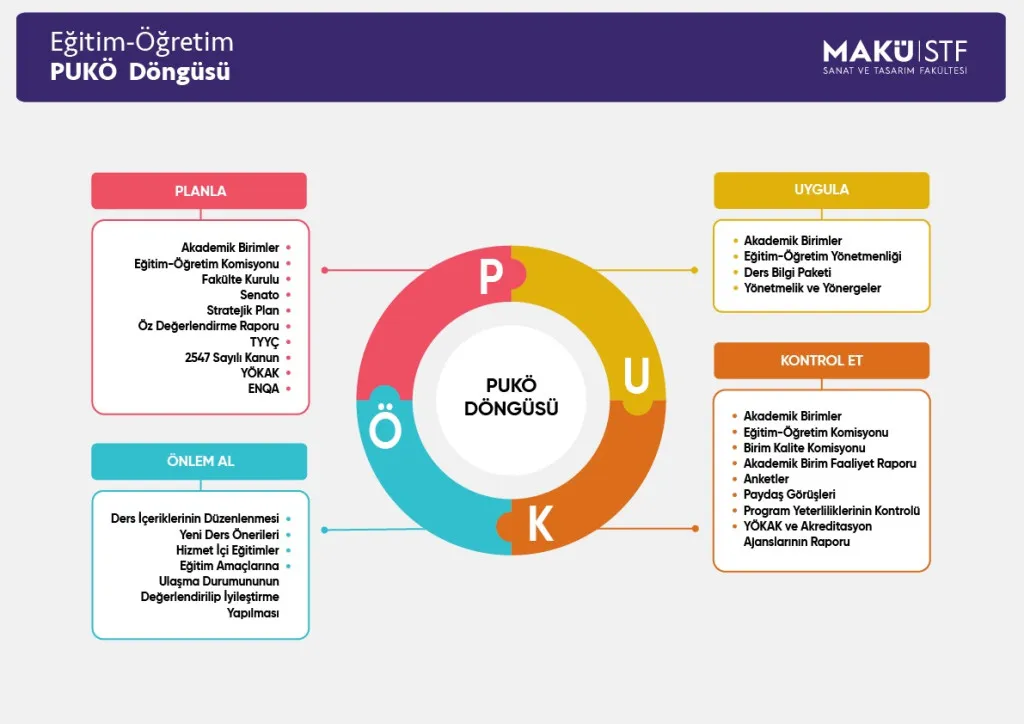
What is the PUKÖ Cycle?
PUKÖ Cycle is a model commonly used in quality management and continuous improvement processes. It is the Turkish equivalent of the English "Plan-Do-Check-Act" (PDCA) cycle and consists of the following four stages:
Plan (P):
Involves setting goals, planning the processes necessary to achieve these goals, and determining resources. In this stage, the current situation is analyzed, and improvement opportunities are identified.
Do (U):
It is the implementation of the plan created in the planning stage. The work can be tested and applied on a small scale or in a pilot area.
Check (K):
The data obtained as a result of the implementation is analyzed, and the extent to which the goals have been achieved is evaluated. This stage aims to check the effectiveness and accuracy of the plan.
Act (Ö):
It is the stage of improving the processes or re-planning if necessary, based on the results obtained in the control stage. Corrective or preventive steps are taken here to increase success.
Advantages of the PUKÖ Cycle
- Continuous improvement: Each cycle is an opportunity to improve existing processes.
- Systematic approach: It sets goals and creates a roadmap to achieve these goals.
- Flexibility: It can be applied in any sector, project, and process.
- Error detection: Allows for detecting errors at early stages and taking precautions.